In 2026, Generative Engine Optimization is no longer a question of relevance. For most marketing teams, the shift has already happened. The focus has moved to how performance is tracked across AI systems that surface answers instead of links.
In our previous article on GEO versus SEO, we covered the structural change in search and outlined the essential tools needed to begin monitoring AI visibility. Since then, the market has continued to evolve. New platforms have entered the space, existing tools have expanded their capabilities, and monitoring AI-generated visibility has become an operational requirement rather than an experiment.
This article introduces additional GEO and AI visibility tools gaining traction in 2026. Any platforms already covered in Part 1 are intentionally excluded here to keep the focus on what is new and emerging.
Why the GEO Monitoring Landscape Keeps Expanding
AI-driven discovery continues to reshape how brands are surfaced and referenced. According to McKinsey research, between 40 percent and 55 percent of consumers in key sectors now use AI-based search as part of their purchasing decisions.
As AI becomes a primary interface for discovery, visibility is being measured differently. McKinsey notes that generative search shifts performance away from traditional rankings and toward how expertise is summarized and referenced by AI systems. In this environment, citations and share of voice inside AI-generated answers carry more weight than page-level position in classic search results.
New and Emerging GEO Tools to Watch in 2026
Writesonic
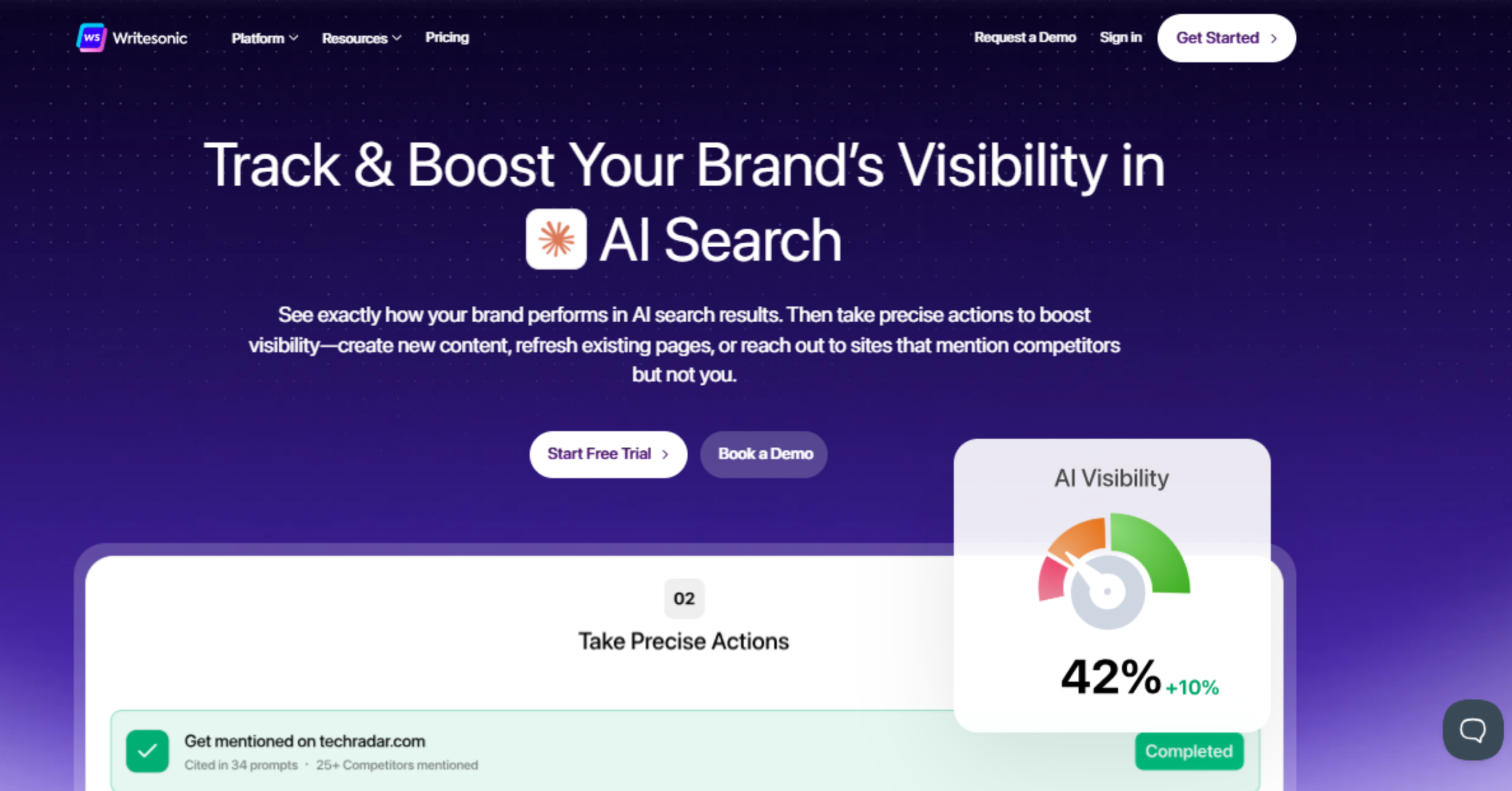
Writesonic evolved from an AI content platform into a comprehensive GEO tool monitoring five major AI engines: ChatGPT, Google Gemini, Claude, Google AI Overviews, and Perplexity.
Key Features: AI visibility tracking with prompt monitoring, citation tracking, and sentiment analysis. Action Center with site audits and recommendations. Geographic Intelligence for location-based query simulation. Content Gap Analysis. Built-in content generation.
Who It’s For: Content-led teams needing both AI writing and comprehensive visibility tracking.
Pricing: Professional at $199/month (annual), Advanced at $399/month, custom Enterprise pricing.
Limitations: Traffic analytics and recommendations require higher tiers. Sentiment tracking needs $499/month plan.
Otterly AI
Otterly AI takes a lightweight approach, focusing exclusively on tracking brand visibility inside AI-generated responses. The platform has grown rapidly to over 10,000 users by focusing on simplicity and affordability.
Key Features:
- AI Output Monitoring across ChatGPT, Claude, Perplexity, and Gemini
- Real-Time Alerts when models include you or leave you out
- Topic-Based Monitoring with custom keywords to watch across conversational outputs
- Detailed GEO audit analyzing 25+ factors with specific recommendations
- Weekly tracking for quick experiments
Who It’s For: Startups, solopreneurs, and small teams looking for simple, affordable AI-mention tracking without enterprise complexity.
Pricing: Free plan available. Paid plans start at $29/month.
Limitations: More basic metrics and fewer workflows than enterprise platforms. Primarily focused on tracking rather than optimization guidance.
AthenaHQ
AthenaHQ positions itself as a premium GEO platform designed for enterprise-first teams that need sophisticated tracking and analysis capabilities.
Key Features:
- Enterprise-grade monitoring across multiple AI platforms
- Advanced analytics and reporting for large organizations
- Dedicated strategist support
- SOC 2 compliance and enterprise security features
Who It’s For: Enterprise teams with serious scale needs and budget for premium solutions.
Pricing: Custom enterprise pricing (contact for quote).
Limitations: Premium pricing makes it inaccessible for smaller teams. May be overkill for organizations just starting with GEO.
Peec AI
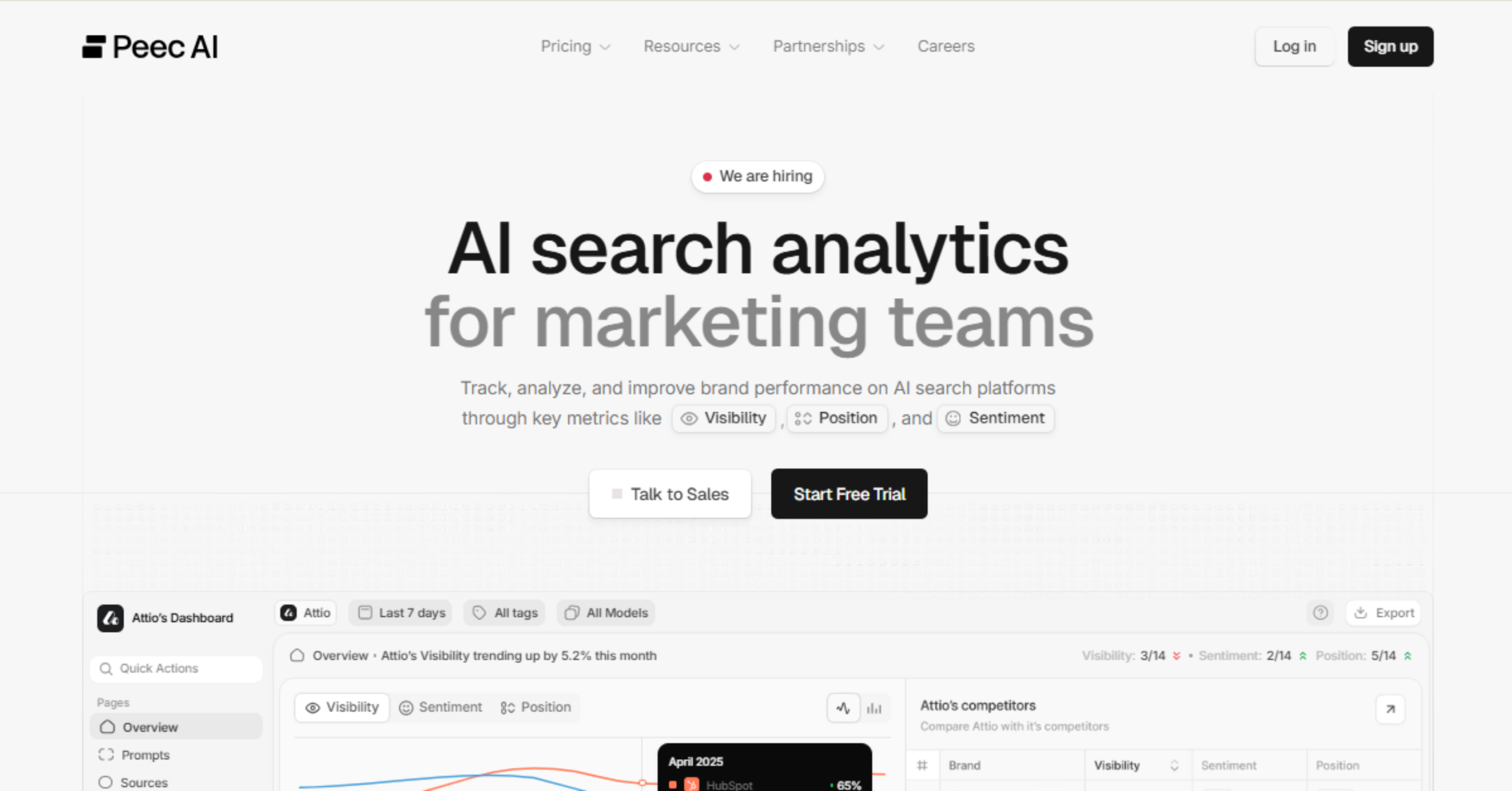
Peec AI concentrates on tracking brand performance across major AI assistants with a focus on simplicity and approachable pricing.
Key Features:
- Clear dashboards for visibility, position, and sentiment across ChatGPT, Perplexity, Claude, and Gemini
- Built-in competitor comparison
- Real-time UI scraping that queries AI platforms at regular intervals
- Affordable sentiment tracking included in intermediate plans ($200+/month)
Who It’s For: Marketing teams wanting a simple, affordable way to see how they and their competitors appear in AI answers without heavy platform complexity.
Pricing: Starter at $99/month (25 prompts, 2,250 AI answers across ChatGPT/Perplexity/AIO, unlimited seats), Pro at $212/month (100 prompts), and Enterprise at $530+ (300+ prompts), with up to 15% yearly discounts.
Limitations: More basic metrics than Profound or Writesonic. No playbook or AI-search visibility auditing tool. Doesn’t show estimated visits from AI search engines or provide built-in end-to-end AI referral attribution.
Scrunch AI
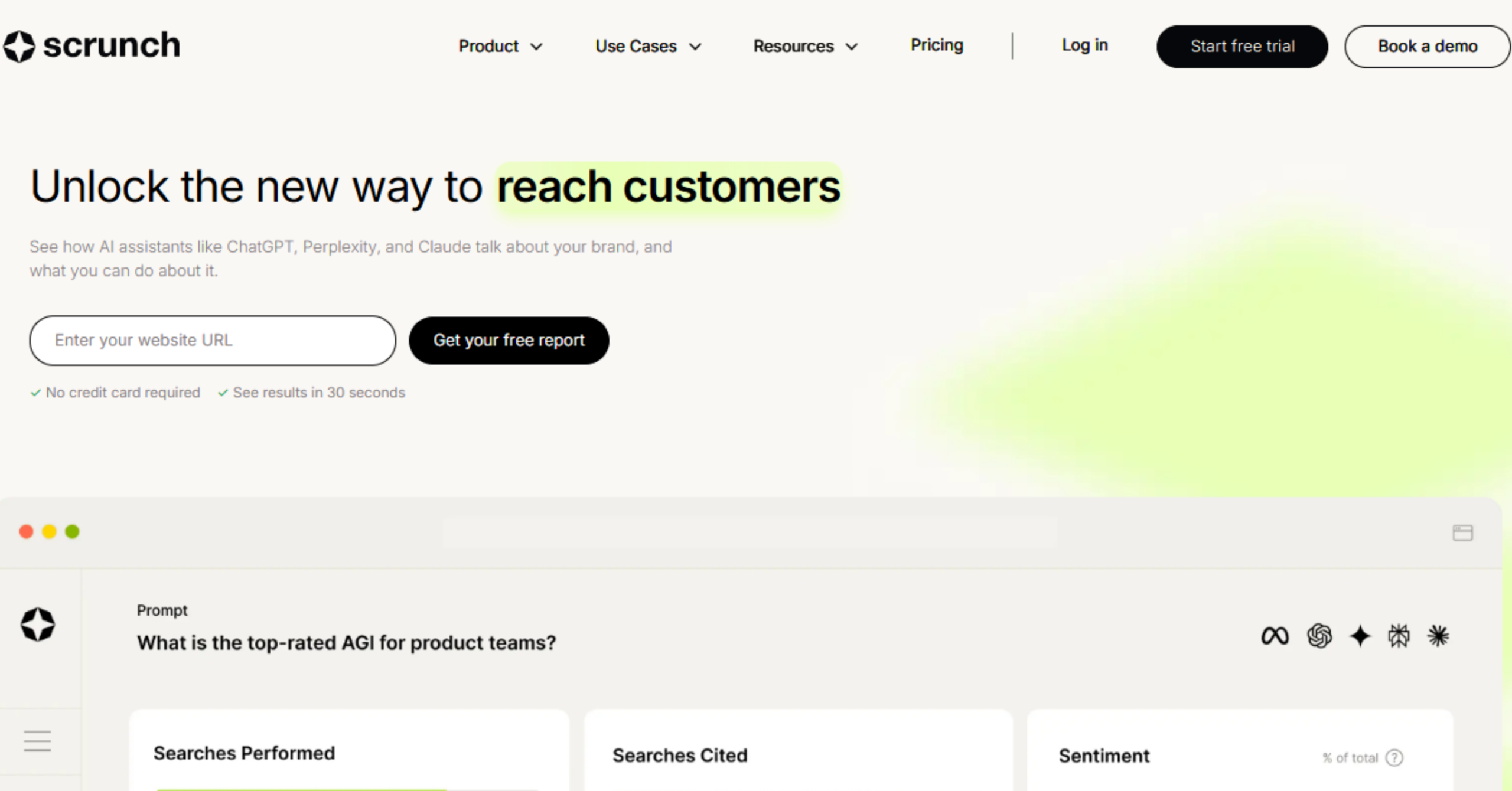
Scrunch AI combines AI visibility monitoring with content-layer optimization, offering a unique approach that bridges tracking and execution.
Key Features:
- AI visibility tracking across major platforms
- Content-layer optimization recommendations
- Integration of monitoring with content strategy
Who It’s For: Teams that want to connect visibility insights directly to content improvements.
Pricing: Starting around $249-250/month for comprehensive solutions.
Limitations: Less established than some competitors. Limited public information about the full feature set.
Nightwatch AI Tracking
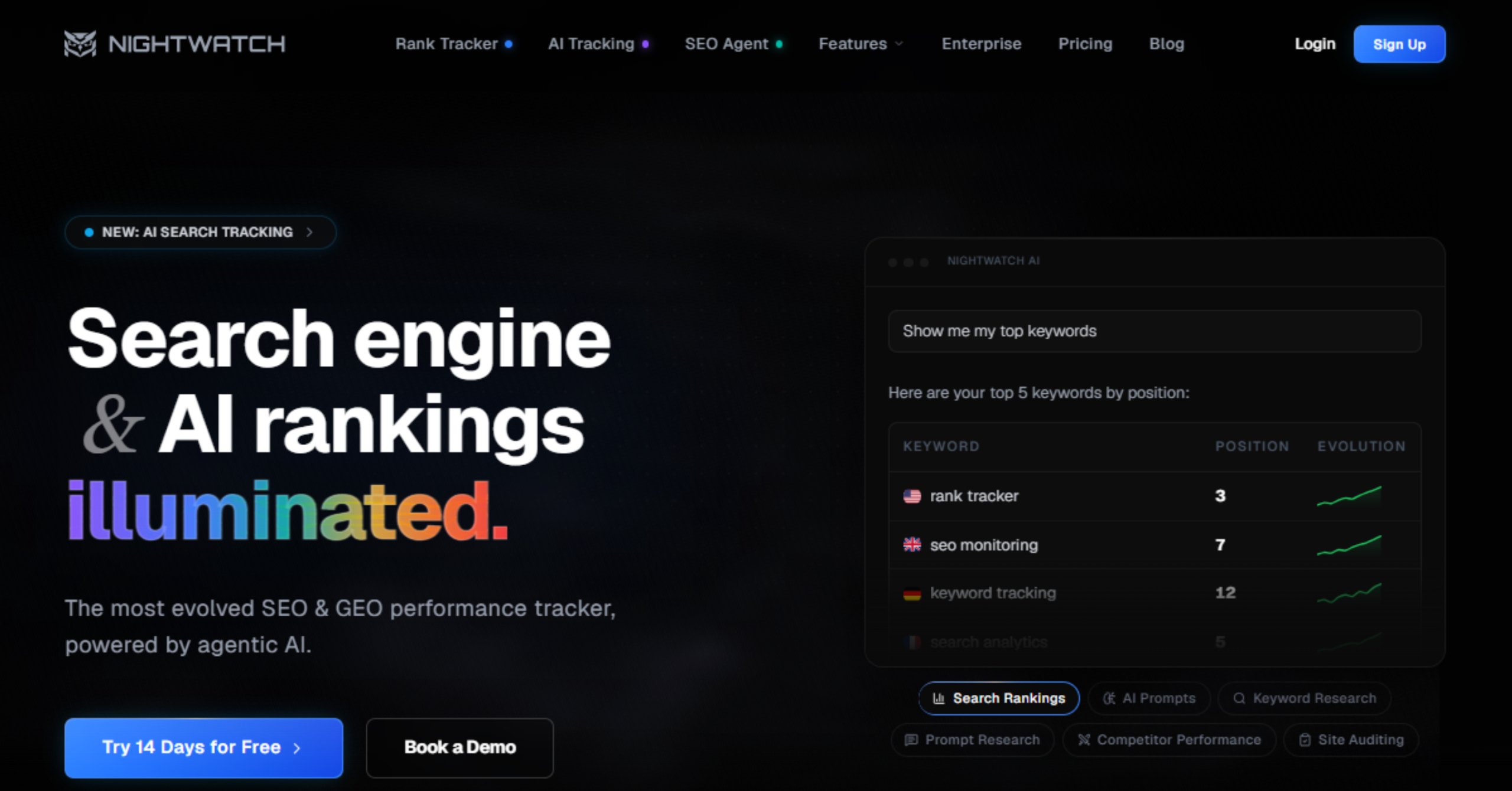
Nightwatch offers a hybrid approach, combining traditional rank tracking with GEO capabilities for teams that need both.
Key Features:
- Hybrid GEO and traditional SEO rank tracking
- SEO features including audits, keyword tracking, and content tools
- Integrated workflow for teams managing both traditional and AI search
Who It’s For: Growth teams that want to monitor traditional search rankings alongside AI visibility without managing multiple platforms.
Pricing: Plans vary based on tracking needs and features.
Limitations: As a hybrid tool, it may not have the depth of dedicated GEO platforms for AI-specific optimizations.
Knowatoa
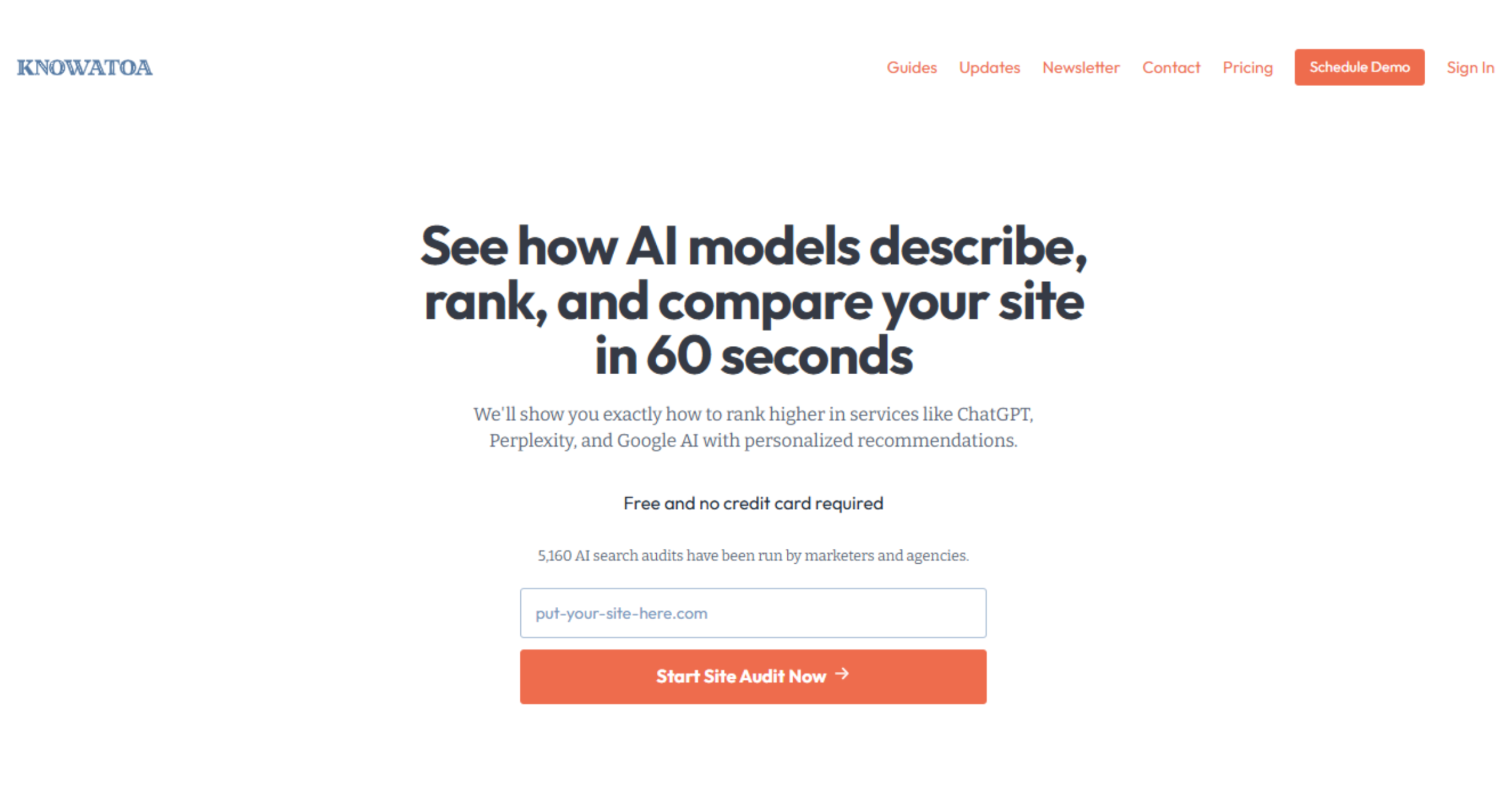
Knowatoa focuses specifically on AI search visibility tracking for brand mentions, offering a streamlined approach for teams prioritizing mention monitoring.
Key Features:
- Focused tracking of brand mentions across AI search platforms
- Visibility analytics for brand presence
- Simplified reporting for quick insights
Who It’s For: Brands primarily concerned with tracking when and how they’re mentioned in AI responses.
Pricing: Contact for pricing details.
Limitations: More limited scope than full-service GEO platforms. Best for basic mention tracking rather than comprehensive optimization.
Ahrefs Brand Radar
Ahrefs, already a trusted name in SEO, has expanded into AI visibility with Brand Radar, allowing teams to monitor brand mentions within AI-generated content.
Key Features:
- Big-picture AI brand visibility within established Ahrefs ecosystem
- Integration with existing Ahrefs SEO tools and data
- Competitive intelligence and brand monitoring
- Trusted platform with proven reliability
Who It’s For: Teams already using Ahrefs for SEO who want to add AI visibility monitoring without switching platforms.
Pricing: Included as part of Ahrefs subscription plans.
Limitations: May not offer the depth of specialized GEO platforms. AI features are supplementary to core SEO functionality.
GetMint
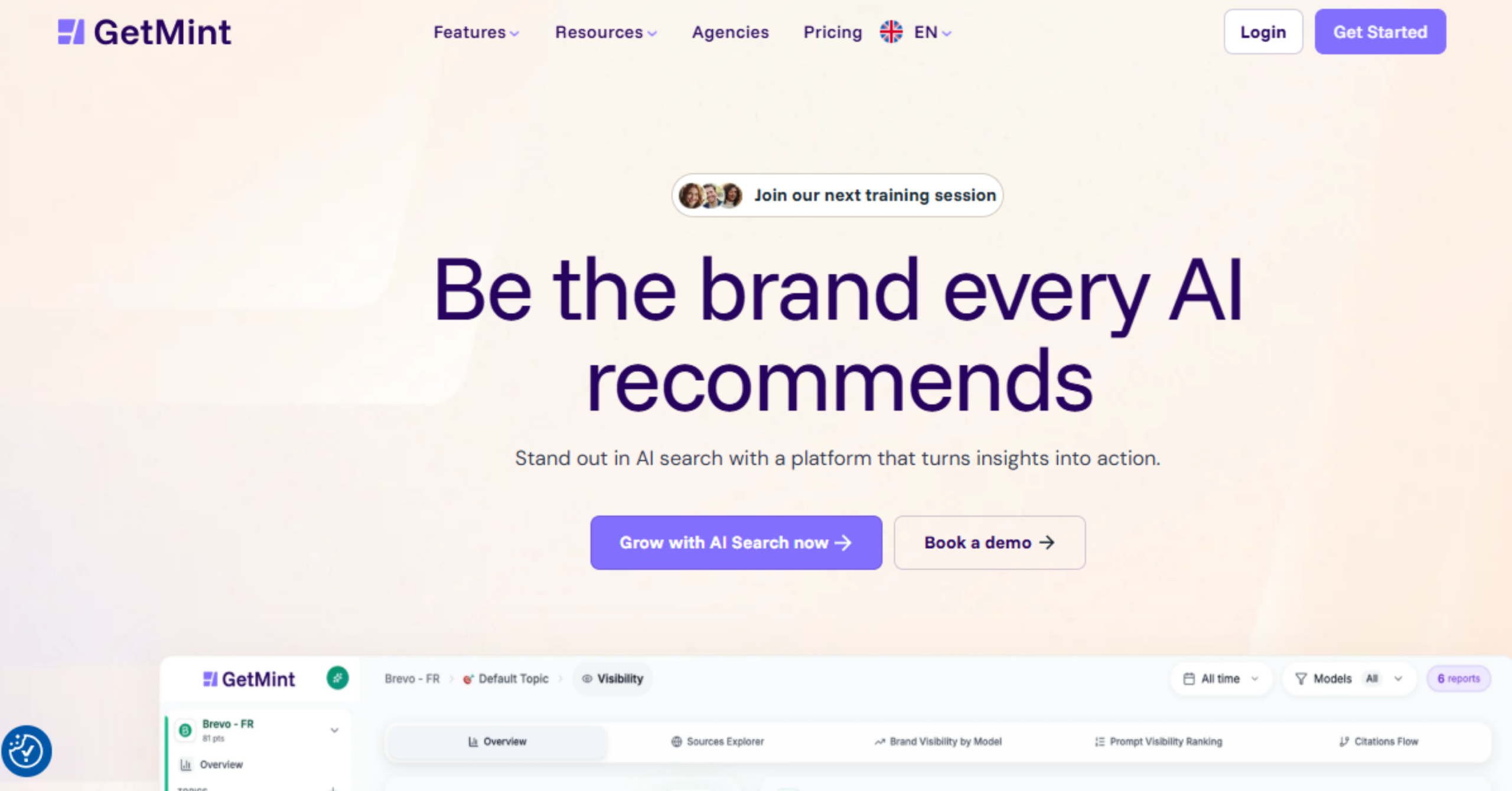
GetMint takes a unique approach by focusing on content quality over volume, helping teams create content engineered to win AI citations.
Key Features:
- Content Studio that analyzes sources currently ranking for target prompts
- Data-backed briefs based on why winning sources are cited
- Tracking of major engines (ChatGPT, AI Overviews, Perplexity) on entry-level plan
- Focus on strategic, citation-winning content rather than high-volume generation
Who It’s For: Teams that want to fix visibility gaps using strategic, data-backed content rather than mass content production.
Pricing: Starter plan at €99/month includes tracking of major AI engines, making it more accessible than many alternatives.
Limitations: Less focus on monitoring breadth compared to enterprise platforms. Best for teams prioritizing content quality and citations.
SE Ranking (with AI Visibility)
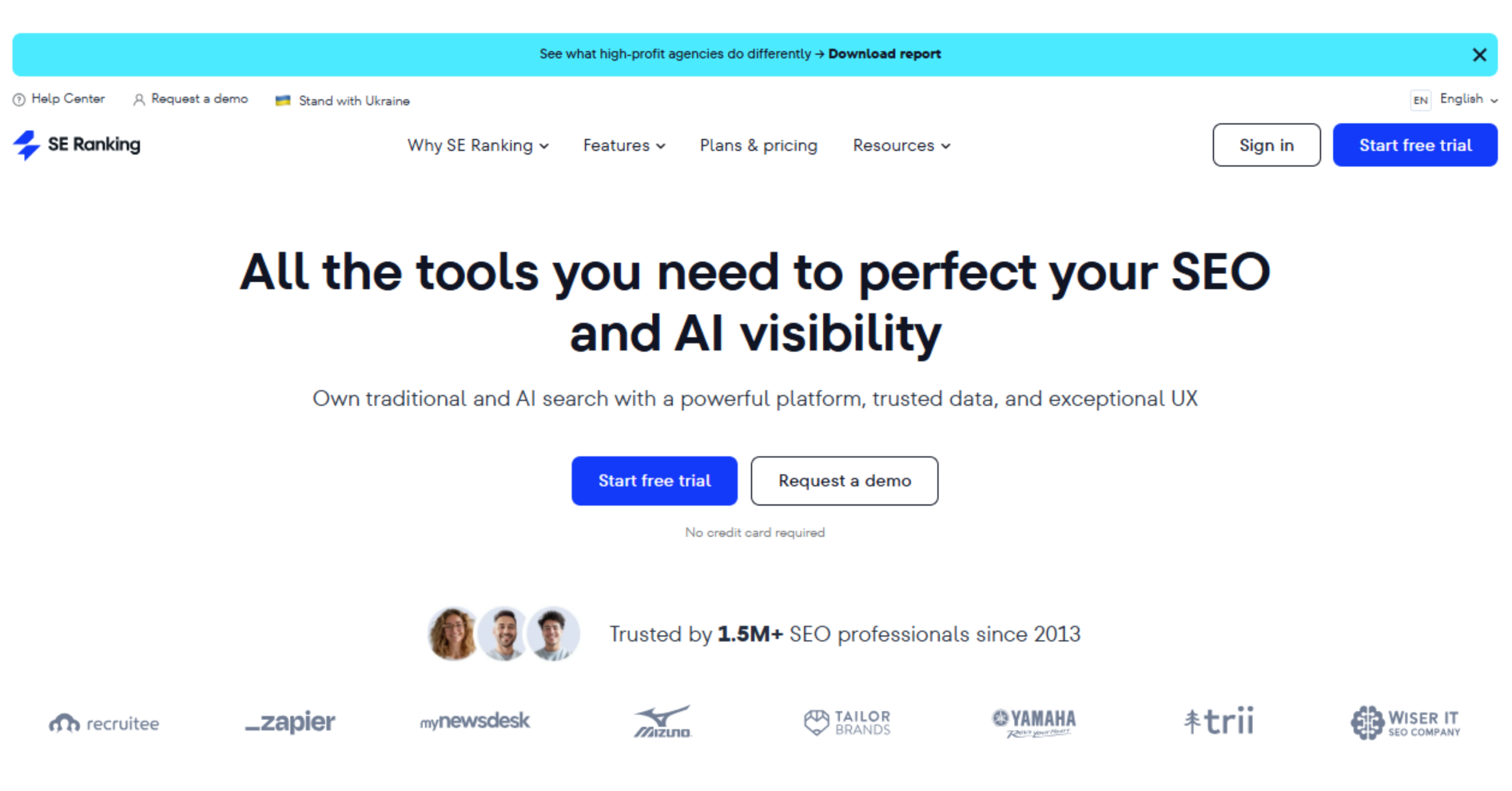
SE Ranking has integrated AI visibility features into its comprehensive SEO platform, delivering strong value for teams already invested in SEO tools.
Key Features:
- Full SEO suite plus AI visibility tracking
- Integrated workflow across traditional and AI search
- Established platform with proven reliability
- Strong value proposition combining multiple capabilities
Who It’s For: SEO-focused teams wanting to add AI visibility monitoring to their existing toolset.
Pricing: Plans starting at €138/month include both SEO and AI visibility features.
Limitations: Fragmented user experience across multiple interfaces. AI visibility features may not be as deep as dedicated GEO platforms.
How to Evaluate GEO Tools Without Chasing Noise
With more tools entering the market, selection discipline matters. Three evaluation criteria remain consistent:
- Multi-platform monitoring: Single-platform tracking creates blind spots across ChatGPT, Perplexity, Claude, Gemini, and Google AI Overviews.
- Actionable insights: Citation counts mean nothing without guidance on what to fix. Look for tools that diagnose why you’re winning or losing citations.
- Workflow integration: The best platforms connect visibility signals directly to content updates and performance reporting rather than creating parallel dashboards.
What This Means for Marketing Leaders
For CMOs, the expanding toolkit signals a measurement shift. Visibility requires monitoring how expertise is summarized and cited by AI systems, not just tracking clicks and rankings.
For marketing teams, content performance now includes inclusion in AI-generated answers. A piece generating 100 views but consistently cited in ChatGPT may outperform content with 1,000 views that AI never references.
The most effective teams treat GEO tools as instrumentation, not solutions. Monitoring supports strategy only when paired with clear content systems and organizational ownership.
What Comes Next
Monitoring will move closer to real-time execution. Tools will increasingly connect visibility signals to content systems for automated updates when patterns shift.
Market consolidation is likely as larger SEO platforms acquire specialized GEO tools. We’re already seeing this with Ahrefs and SE Ranking adding AI visibility features.
The organizations that adapt fastest will use the right tools with discipline rather than chasing every new platform.
Building a GEO-Ready Operating Model
Visibility in AI search is earned through clarity and strategic consistency. If your organization tracks GEO performance, this toolkit offers opportunities to deepen insight. If you’re just starting, our previous GEO vs. SEO article provides foundational context.
At Marketing Mob, we use monitoring tools to understand how AI-driven discovery works, without adding unnecessary complexity. Our goal is to turn visibility data into better decisions. By identifying what drives brand mentions across major AI platforms, we help teams refine their content to improve visibility, relevance, and positioning.
Choose your tools wisely, measure what matters, and ensure your brand story is told accurately when AI systems synthesize information about your industry or organization.
If your team wants support translating GEO monitoring into clearer content standards, stronger structure, and more consistent AI visibility, Marketing Mob can help you operationalize the work behind the dashboards.
FAQs